
Designing for the driver of the next long-haul truck
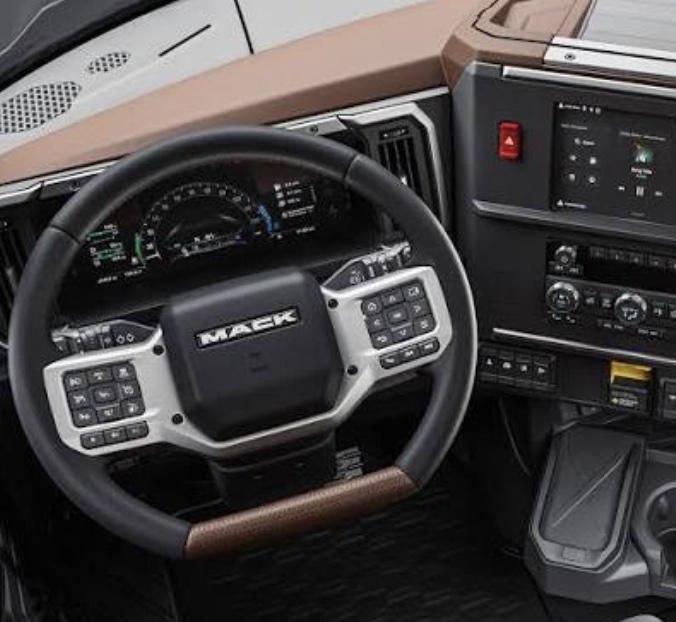
Confidential project: the design work is described in words only. The photo shows the released production interior.
- Company
- Volvo Trucks North America, with Mack Trucks
- My role
- Senior UI/UX Engineer
- Dates
- May 2019 to Mar 2020
- Users
- Long-haul truck drivers
- Scope
- Driver interactions with gauges and interfaces, for driving and maintaining the truck
- Setting
- A secure design studio with badge-only access, where the cab took shape as quarter-scale, three-quarter-scale and full-size physical models
Process
Understand
Learned how drivers actually work through a long haul
Define
Wrote driver scenarios as the starting point for every design
Explore
Explored interactions alongside the physical cab as it evolved through physical models
Build
Modernized templates, personas and resources for 100+ functions
Share
Shared resources used by Volvo and Mack teams
The problem
A long-haul driver spends their working day in the cab. Every gauge and control has to be readable at a glance and usable without pulling attention from the road, and the same interfaces also support maintaining the truck. Design work had started from feature lists; I made it start from the driver.
My role
I introduced user scenarios and research as the first step for the driver interfaces, mainly for Volvo with Mack teams also using the resources, and modernized the templates, personas and design resources behind more than 100 functions. I worked inside the secure studio alongside the people shaping the physical cab.
Key decisions
The driver's day, not the feature list.
Each design began with a scenario about a real moment on the road or at a stop.
Subtle by design.
In a moving truck, the best interaction is often the one the driver barely notices.
Shared resources for two brands.
Updating the templates and personas everyone worked from let improvements reach all 100+ functions instead of one screen at a time.